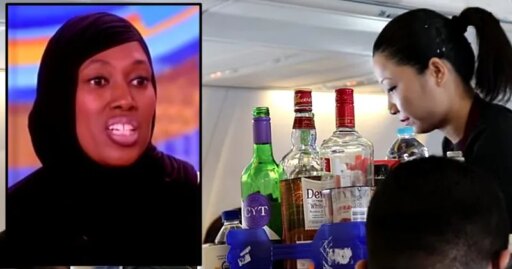

A Muslim flight attendant was fired when she refused to serve passengers alcohol as a result of it’s in opposition to her faith. Nevertheless, after suing the airline for discrimination, the courtroom issued a ruling nobody was anticipating.
When Detroit resident Charee Stanley obtained employment as a flight attendant for ExpressJet, she was totally succesful and prepared to carry out her skilled duties. As soon as she transformed to Islam, nevertheless, sure duties she was required to hold out turned explicitly off-limits, inflicting a rift between her and her colleagues.
As a Muslim, Stanley says she just isn’t solely prohibited from consuming alcohol, however she will’t even contact or promote it. After all, this made the duties of her place, which included serving beer and liquor to passengers, unimaginable for her to carry out. As such, she went to her superiors and defined her scenario.
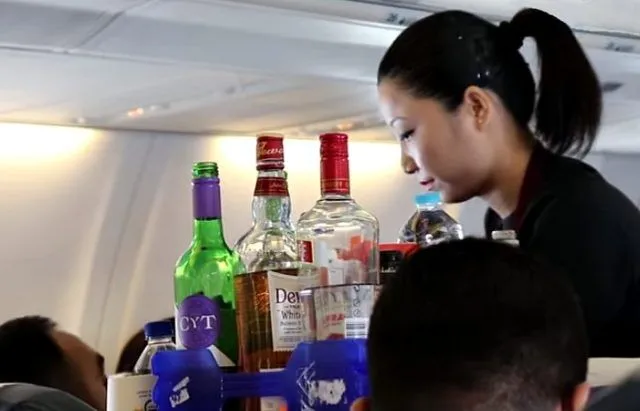
At first, Stanley says ExpressJet was wonderful with accomodating her religion, permitting her to barter along with her coworkers that they might cowl her duties in serving clients alcohol. Nevertheless, one other flight attendant complained about having to do a part of Stanley’s job, which rapidly induced a difficulty along with her employer.
In accordance with The Guardian, Stanley was advised that she couldn’t drive one other flight attendant to carry out her work duties and that she both should serve alcohol throughout these cases or resign. When she refused, Stanley was pressured out of her place, prompting her to contact the Equal Employment Alternative Fee. Though an investigation was inconclusive, she maintained the appropriate to sue ExpressJet for discrimination.
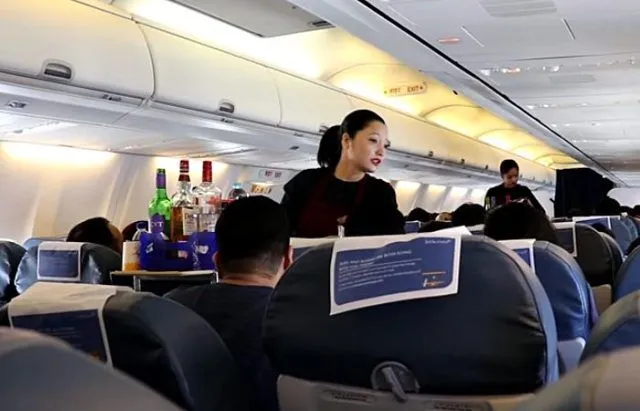
Lawsuit Stanley v. ExpressJet alleged that ExpressJet violated Title VII of the Civil Rights Act of 1964 by not offering affordable spiritual lodging for her. As such, she insisted on the reinstatement of her job, again pay, punitive damages, and compensation for courtroom prices. Thus started Stanley’s lengthy courtroom battle.
Stanley’s first disappointment got here when the Sixth Courtroom dominated that her lawsuit couldn’t be heard in a federal courtroom as a consequence of the truth that the declare posed a battle between the requested lodging and collective bargaining, based on the Council on American-Islamic Relations (CAIR). The courtroom determined that the criticism should both be one regarding spiritual rights within the office or employees’ proper to unionize. The courtroom concluded that she might solely deliver her case earlier than a labor arbitrator.

Unwilling to surrender, Stanley took her case to the U.S. Supreme Courtroom in a bid to have the decrease courtroom’s determination overturned. Sadly for her, the SCOTUS declined to think about whether or not her declare must be despatched to an arbitrator, upholding the Sixth Courtroom’s determination.
The ruling concludes that disputes over spiritual lodging within the office should be determined by an arbitrator and that her allegations that her firing was an act of retaliation over her Muslim religion lacked any proof.
Stanley positioned herself in a sticky scenario when she took the onus upon herself to seek out coworkers to routinely cowl her work duties. When one worker refused, Stanley was unable to meet her facet of the discount and was subsequently required to carry out the duty that contradicted her spiritual perception.
Whereas companies have the duty to fairly present lodging for spiritual beliefs, it’s also the obligation of the workers to not unnecessarily burden employers and coworkers with their private beliefs. Crossing this line not solely creates a poisonous work surroundings however can simply finish in a authorized mess.