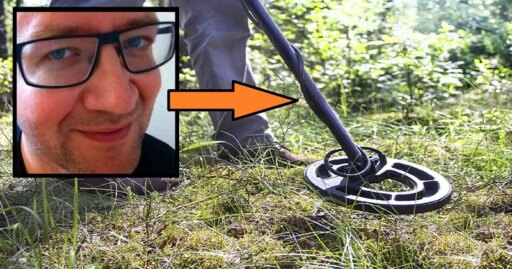

When Erland Bore’s physician ordered him to get off the sofa, he took his recommendation, resulting in the luckiest day of his life. His newfound pastime of metallic detecting acquired him some train, and it additionally led to the “gold discover of the century.”
Erland Bore of Norway made headlines after his physician instructed him to select up a pastime so as to assist his affected person get off the sofa. The Norwegian man bought a metallic detector and started strolling across the rugged terrain of the southern island of Rennesoey, close to Stavanger, Norway.
Bore initially assumed his metallic detector found foil-wrapped chocolate cash buried within the earth. “At first I assumed it was chocolate cash or Captain Sabertooth cash,” stated Bore, referring to a fictional Norwegian pirate. “It was completely unreal.”
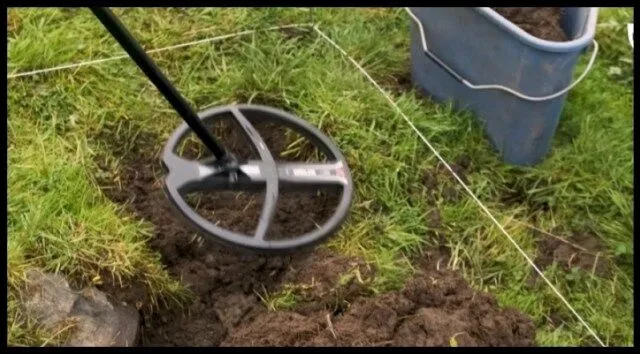
Bore, who aspired to be an archaeologist as a toddler, made the invention on a farmer’s property. He had been treasure looking all day and was about to return house when the system started beeping on a hillside. He contacted archaeologists, who took cost of the search.
In line with CBS Information, they discovered 9 pendants, three rings, and ten gold pearls in what was considered the nation’s gold discover of the century. In line with Ole Madsen, director of the College of Stavanger’s Archaeological Museum, discovering “a lot gold on the identical time is extraordinarily uncommon.”
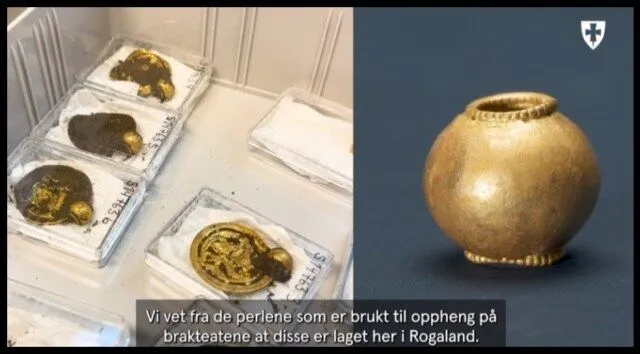
“That is the gold discover of the century in Norway,” claimed Madsen. The museum shared a video of the treasure and posted photographs on social media, stating, “It is going to be preserved and displayed as quickly as attainable in our upcoming exhibition.” The design on the medallions, which is a sort of horse from Norse mythology, based on archaeologists, makes the discover distinctive.
In line with museum affiliate professor Håkon Reiersen, the gold pendants, that are flat, skinny, single-sided gold medals often known as bracteates, date from roughly 500 AD. In line with historical past, this is able to be the so-called Migration Interval in Norway, which lasted between 400 AD and round 550 AD, and it was characterised by vital migrations all through Europe.

In line with Reiersen, the pendants and gold pearls had been a part of “a really showy necklace” customary by professional jewelers and worn by society’s strongest. He additionally talked about how distinctive the invention is in a Scandinavian context. Professor Sigmund Oehrl of the identical museum, one other professional on such pendants, acknowledged that over 1,000 golden bracteates have up to now been found in Norway, Sweden, and Denmark.
In line with Professor Oehrl, the symbols on the pendants regularly depict the Norse god Odin mending his son’s ailing horse. The horse’s tongue hangs out on specific pendants found by Bore, and “its slumped posture and twisted legs present that it’s injured,” Oehrl defined. “The horse image represented sickness and misery, however on the identical time hope for therapeutic and new life.”
The newest comparable discover in Norway dates again to the nineteenth century. “Given the situation of the invention and what we all know from different comparable finds, that is most likely a matter of both hidden valuables or an providing to the gods throughout dramatic instances,” Professor Hakon Reiersen declared.
In line with Norwegian regulation, each Erland Bore and the landowner can be compensated with a reward for the discover. Nevertheless, the quantity was not instantly introduced. Objects courting earlier than 1537 and cash courting earlier than 1650 are thought-about state property in Norway and have to be turned in. The treasure would have remained misplaced ceaselessly if Bore by no means determined to get off the sofa that day.