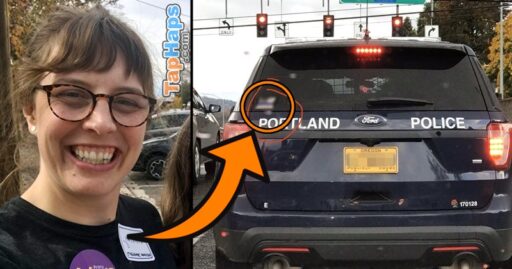
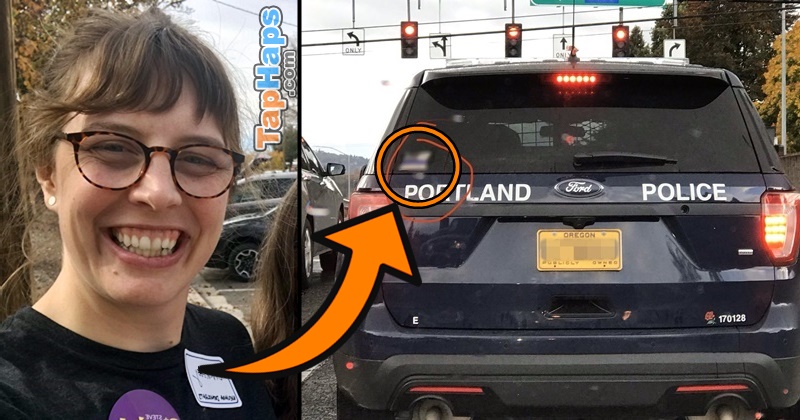

Whereas ready at a stoplight in Portland, Oregon, a prison protection lawyer observed a decal on the police cruiser in entrance of her. After taking a more in-depth look, she warned the town a few potential lawsuit for permitting the “terrifying” window sticker.
Self-described prison protection and appellate lawyer Lindsey Burrows was in her automobile when she noticed a Portland Police SUV simply forward of her at a stoplight. When she observed an odd window sticker within the automobile’s again window, she rapidly snapped an image that has since sparked a authorized storm.
For a lot of activists, Portland has change into a hub for protesting and social actions, together with the demand for the dismantling of legislation enforcement. After all, whereas protesting perceived systematic bias within the justice system, many have turned their focus and outrage towards what they purport to be symbols of racism relatively than inarguable acts of racial injustice.
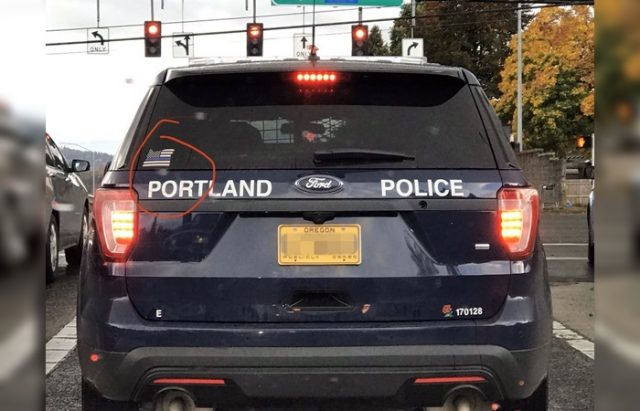
Burrows posted a photograph of a patrol automobile from the again, which shows a small “skinny blue line” flag sticker within the form of the state of Oregon. Whereas posting the picture to Twitter, Burrows expressed her outrage and claimed that the town may quickly see a pricey lawsuit over the decal.
“That is unacceptable,” Burrows wrote. “Is the particular person driving this automotive going to be conducting visitors/pedestrian stops?! Terrifying. Additionally didn’t the county simply settle a $100k lawsuit over this bs? Town is subsequent, I assume…”
Inside hours, her publish garnered the eye of the media, which appeared to do a number of the authorized work for Burrows. In accordance with The Oregonian, the sticker is a violation of metropolis coverage on “non-public decals or markings,” that are prohibited from being displayed on metropolis automobiles.
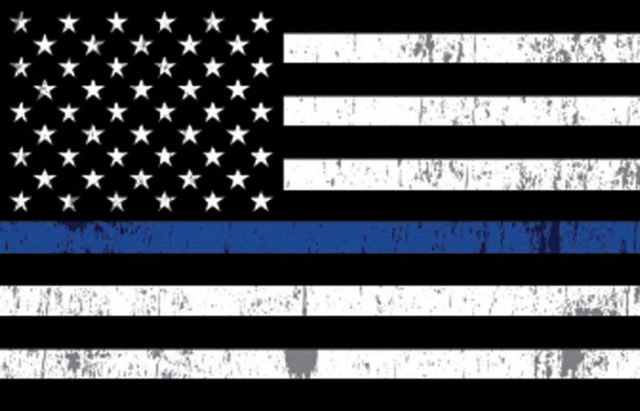
The media have propagated that the “skinny blue line” is essentially racist and solely surfaced with the latest pro-law enforcement motion. Nonetheless, the image has been common with officers because the Fifties and has served to specific assist for police and their sacrifices. Nonetheless, media figures and activists like Burrows have inarguably labeled the signal a hate image, demanding or not it’s faraway from the general public eye.
“It involved me that Portland Police would show this image with out (or regardless of?) recognizing that the image had been utilized in opposition to the #blacklivesmatter motion and by white supremacists,” she mentioned.
Portland Police Lt. Tina Jones quickly turned conscious of the tweet and responded to the outcry. Though she didn’t say if the division had opened an investigation, she confirmed that the decal, if positioned on the automobile by an officer, can be a “minor coverage violation” warranting of disciplinary motion.
“Our automobiles are shared and at the moment it’s unsure when it was positioned on the automobile and by whom,” Jones mentioned in an e-mail to The Oregonian/OregonLive.
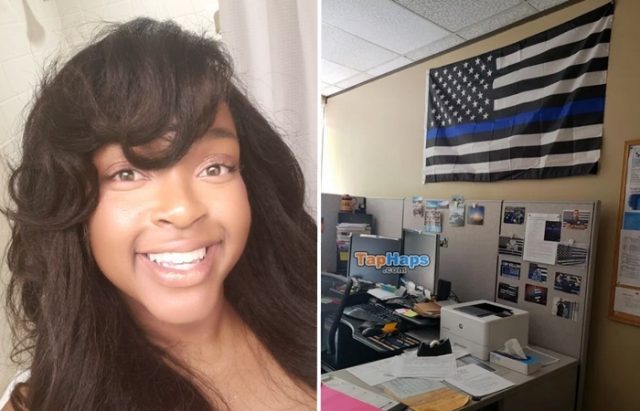
In Burrows’ tweet, she references a “$100k lawsuit,” which was paid out to a black Multnomah County worker. The case involved Karimah Guion-Pledgure, who efficiently claimed that the county had fostered a racially hostile office by permitting colleagues handy up the Blue Lives Matter flag. Guion-Pledgure additionally alleged that coworkers harassed her after she complained.
Burrows means that the town of Portland may face the identical sort of lawsuit if the incident isn’t dealt with correctly. In accordance with her tweet, dozens of residents agree along with her conclusion that the decal holds racial symbolism and shouldn’t be allowed.
Burrows’ criticism isn’t unusual, as extra activists come ahead with related situations to purport that legislation enforcement officers harbor racial biases. After all, the “skinny blue line” is only one of many patrol automobile stickers which have brought on a backlash, which incorporates the American flag and the “In God We Belief” motto.
For now, the police division is trying into the problem and can take care of the perpetrator of the sticker accordingly. Nonetheless, it certainly gained’t be the final criticism from the anti-police crowd in relation to accusing officers of inherent racism.